
Cars have existed for spill a century, and through all those years we've seen thousands of models set out from varied makes. Most cars that are produced appear quite kind of like what had been created before. This is the compilation of the 15 cars that may be referred as trendsetters or Innovative.
1) BENZ’S PATENT- MOTORWAGEN :
Launched Year - 1885
The Benz Patent-Motorwagen (or motorcar), built in 1885, is widely regarded as the first automobile; that is, a vehicle designed to be propelled by an internal combustion engine. The original cost of the vehicle in 1885 was $1,000 (equivalent to $26,248 in 2015).
The Benz Patent-Motorwagen was a three-wheeled automobile with a rear-mounted engine. The vehicle contained many new inventions. It was constructed of steel tubing with woodwork panels. The steel-spoked wheels and solid rubber tires were Benz's own design. Steering was by way of a toothed rack that pivoted the unsprung front wheel. Fully elliptic springs were used at the back along with a live axle and chain drive on both sides. A simple belt system served as a single-speed transmission, varying torque between an open disc and drive disc. The first Motorwagen used the Benz 954 cc single-cylinder four-stroke engine with trembler coil ignition. This new engine produced 2⁄3horsepower (0.50 kW) at 250 rpm in the Patent-Motorwagen.

2) FORD’S MODEL T :
Launched Year - 1908
The Model T, also known as the “Tin Lizzie,” changed the way Americans live, work and travel. Henry Ford’s revolutionary advancements in assembly-line automobile manufacturing made the Model T the first car to be affordable for a majority of Americans. For the first time car ownership became a reality for average American workers, not just the wealthy. So they were sold more than 15 million. Conceived by Henry Ford as practical, affordable transportation for the common man, it quickly became prized for its low cost, durability, versatility, and ease of maintenance. Assembly-line production allowed the price of the touring car version to be lowered from $850 in 1908 to less than $300 in 1925.
The Model T was offered in several body styles, including a five-seat touring car, a two-seat runabout, and a seven-seat town car. All bodies were mounted on a uniform 100-inch-wheelbase chassis.The engine generated 20 horsepower and propelled the car to modest top speeds of 40–45 miles per hour (65–70 km/h). The transmission, consisting of two forward gears and one reverse, was of the planetary type, controlled by foot pedals rather than the more common hand lever used in sliding-gear transmissions.

3) CADILLAC’S TOURING EDITION:
Launched Year - 1912
Cadillac, which was acquired by General Motors in 1908, had launched the Model 30 in 1908, the year that the company adopted its famous ‘Standard of the World’ slogan. All previous models were dropped, and the ‘Thirty’ became Cadillac’s sole offering from August of 1908 through September of 1914.
1912 Model 30 Cadillac was the first car to be fitted with both electric staring and lighting – the famous ‘Delco’ system. This thirty horsepower, four cylinder engine with a bore and stroke of 4.5 by 4.5-inch was built with a selective type sliding gear transmission and was delivered at a cost of $1,890. The vehicle is capable of cruising at a rate of 40 to 45 miles per hour in a day when roads were in their mere infancy.

4) ESSEX’S CLOSED COACH:
Launched Year - 1918
The Essex was a brand of automobile produced by the Essex Motor Company between 1918 and 1922 and by Hudson Motor Company of Detroit, Michigan between 1922 and 1933. During its production run, the Essex was considered a small car and was afford-ably priced. The Essex is generally credited with starting a trend away from open touring cars design toward enclosed passenger compartments.
Back
then, the open-tops were the norm, but now it’s just the opposite:
fully-enclosed vehicles are much more common. Thanks to the Essex, the
fully-enclosed became more affordable and convertibles more expensive.

5) FORD’S MODEL 18:
Launched Year - 1932
In 1932, ford model 18
put drivers in the fast lane by having the first v8 engine-powered car. The
four-cylinder model b was also introduced at the same time as the model 18. The
18’s 3.6l v8 motor produced 65 horsepower and was such a success that the model
b easily got forgotten.
It additionally had been
raved by famous robber Clyde Barrow and he
purportedly wrote a letter to industrialist thanking him for manufacturing such
a “fine car”. Whether or not this is often true or not may be a mystery,
however one issue is for certain: the model eighteen very was a fine automotive
and positively modified the motoring world.

6) BUICK’S Y-JOB:
Launched Year - 1938
The Buick Y-Job was the auto industry's first concept car, produced by Buick in 1938. Designed by Harley J. Earl, the car had power-operated hidden headlamps, a "gunsight" hood ornament, electric windows, wraparound bumpers, flush door handles, and prefigured styling cues used by Buick until the 1950s and the vertical waterfall grille design still used by Buick today.
The "Y" in the name has two explanations:
- All experimental cars were called "X", so Earl simply went to the next letter in the alphabet.
- The "Y" designation was selected by Earl because it was used extensively in the aviation industry denoting the most advanced prototypes.

7) Volkswagen Beetle:
Launched Year - 1938
The Volkswagen Type 1, more commonly known as the Beetle, Fusca, Coccinelle, Vocho, Bug, Volky or Käfer (German), is a compact car, produced by Volkswagen from 1938 until 2003. In 1933 Adolf Hitler met with Ferdinand Porsche to discuss the development of a "Volks-Wagen" ("People Car"), a basic vehicle that should be capable of transporting two adults and three children at a speed of 100 km/h (62 mph). The car was designed to be as simple as possible mechanically, so that there was less to go wrong; the aircooled 985 cc 25 hp (19 kW) motors proved especially effective in actions of the German Afrika Korps in North Africa's desert heat. This was due to the built-in fan-cooling and the superior performance of the flat-four engine configuration. The innovative suspension design used compact torsion beams instead of coil or leaf springs.
The original Beetle had the longest production run of any vehicle ever. It was a top-seller in the U.S. for years during the 1950s and set the standard for small cars like the Chevrolet Corvair and Ford Pinto. In the international poll for the award of the world's most influential car of the twentieth century the Beetle came fourth after the Ford Model T, the Mini and the Citroën DS. On the 15th May 1981 the 20 Millionth Beetle was produced in Mexico. Today Mexico is the only country in the world which still manufactures the Beetle.




8) BANTAM’S JEEP:
Launched Year - 1940
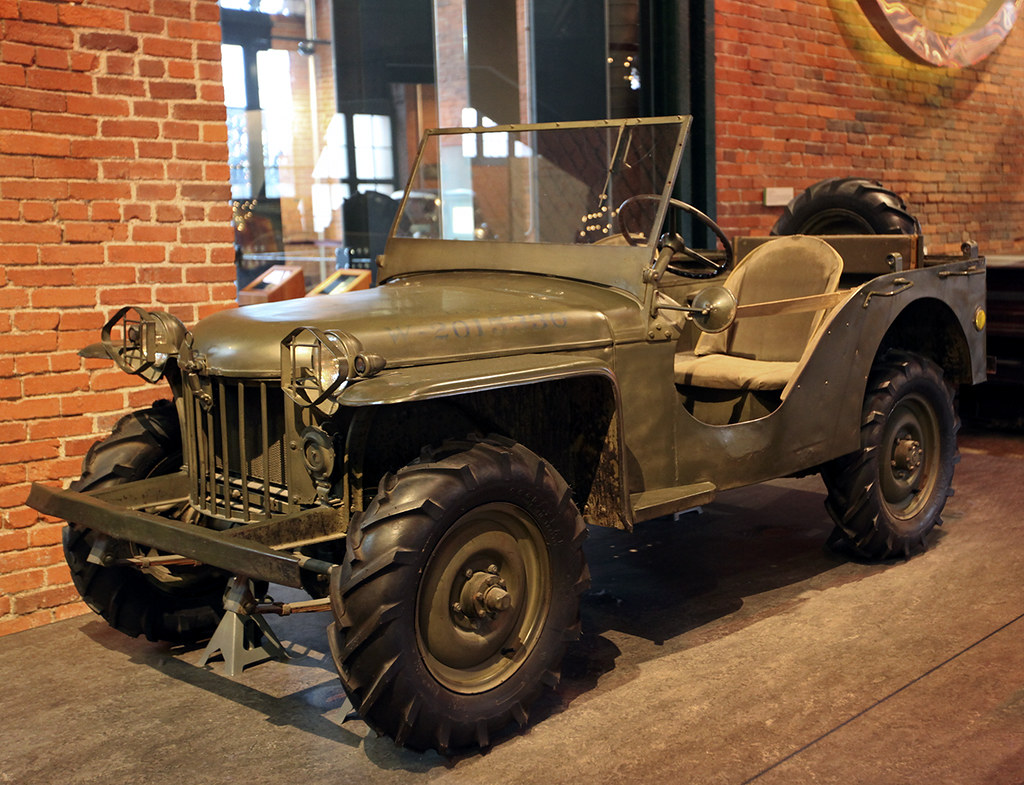
The Jeep originated from the American Bantam Car Company in Butler, Pennsylvania. There is an interesting story surrounding the creation of this new designed car. The four-wheel-drive Bantam Jeep unexpectedly changed the car industry in 1940. It was actually created for the purpose of being an innovative vehicle used for the military to help win World War II. Surprisingly, it was not a big manufacturer that came up with this; the Jeep was made from a little bankrupt company in a small factory and it was all made possible by the townspeople coming forth to help get this important job done for the military. This sturdy vehicle that was taken from the deserts, into jungles, and onto beaches was known as the only true American sports vehicle ever made. It could go anywhere and do anything, and today it continues to do so all over the world.
9) BMC’S MINI:
Launched Year - 1959
The Mini is a small economy car made by the British Motor Corporation (BMC) and its successors from 1959 until 2000. The original is considered a British icon of the 1960s. Its space-saving transverse engine front-wheel drive layout – allowing 80 percent of the area of the car's floorpan to be used for passengers and luggage – influenced a generation of car makers. In 1999 the Mini was voted the second most influential car of the 20th century, behind the Ford Model T, and ahead of the Citroën DS and Volkswagen Beetle. Mini also had innovative suspension that used space-saving rubber
cones. On top of that, the FWD layout and lightweight design helped it win the
Monte Carlo rally several times

10. COOPER’S T43:
Launched Year - 1957
The Cooper T43, built in 1957, used the transaxle from a Citroën Traction Avant to transfer power to the rear wheels from a 2.0L, four-cylinder engine mounted behind the driver. The T43 became the first race car to win a world championship race in the 1958 Grand Prix. It was soon replaced by Cooper’s own T45 (in the next race, which it also won), and the next season the T51 arrived. The most impressive fact is that the T43 beat cars that had the maximum allowed 2.5L engine against its smaller 2.0L! This is the car that established open-wheel racing as we know it.

11) FORD’S MUSTANG:
Launched Year - 1964
The first-generation Ford Mustang was manufactured by the Ford Motor Company from April 1964 until 1973. The introduction of the Mustang created a new class of automobile known as the pony car. The Mustang’s styling, with its long hood and short deck, proved wildly popular and inspired a host of imitators. This is the car that started America’s love affair with muscle and punch. It was the first of its kind and a wildly popular hit from the start.
The Ford Mustang as the first -- and so far the only -- car to receive the Tiffany Award for Excellence in American Design. They all are powered by the 260 cubic-inch V8 engine and equipped with power steering, back-up lights and an automatic transmission. Other special features include the blue racing stripe and 'Official Pace Car' decals along the sides.

12) CHEVY’S EL CAMINO SS 454 LS6:
Launched Year - 1970
The Chevrolet Chevelle made its debut just as the muscle car era was getting started. Introduced to compete with the Ford Fairlane, the Chevelle, however, still carried with it some odes to the past just like many early muscle cars, like the 115-inch wheelbase found previously on the famed Chevy Tri-Fives. But Chevy’s entrance into the muscle car world was not futile and the Chevelle quickly transformed from a bulky under-powered family car in early 1964 to a more sporty muscle machine starting just half a year later.
It was made with the same SS454 exterior and interior badging, restyled front end with its domed hood and Blacked-out V-shaped grille, chromed 5-spoke SS wheels, custom vinyl seat trim and special round-faced gauges as the Chevelle SS. The El Camino SS also included F41 special suspension, dual exhaust and power front disc brakes. The big deal for SS buyers in 1970 was the new 454 CI engine available in either the 360 HP LS5 option or the LS6, which offered the highest ever horsepower rating for a production car.

13) AUDI’S SPORT QUATTRO:
Launched Year - 1980
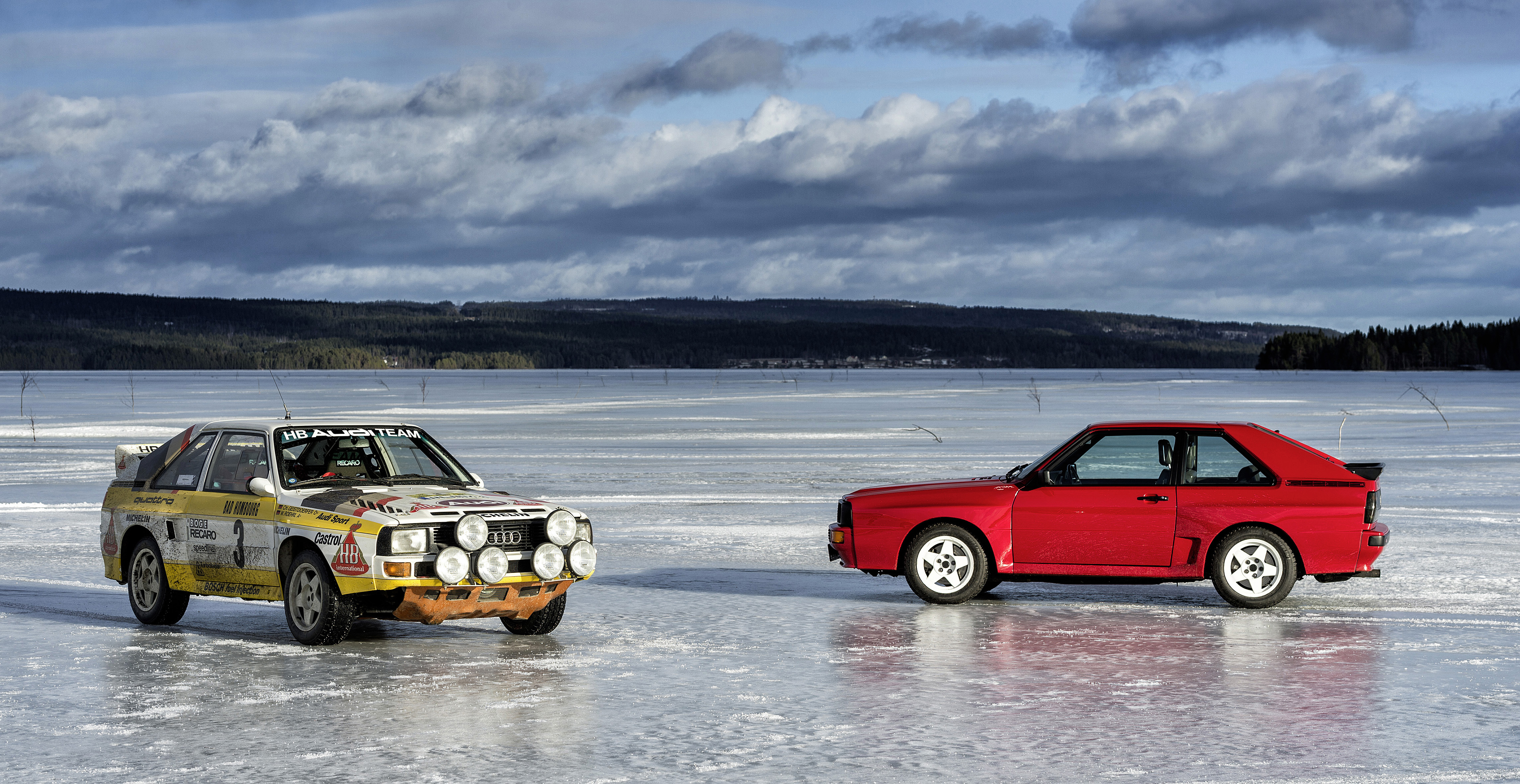
The Audi Quattro is a road and rally car, produced by the German automobile manufacturer Audi, part of the Volkswagen Group. It was first shown at the 1980 Geneva Motor Show on 3 March. Production of the original version continued through 1991. The Audi Quattro was the first rally car to take advantage of the then-recently changed rules which allowed the use of four-wheel drive in competition racing. It won competition after competition for the next two years. To commemorate the success of the original vehicle, all subsequent Audis with their trademark quattro four-wheel-drive system were badged "quattro" with a lower case "q" and in a distinct typeface which has remained nearly unchanged since its inception.
14) CHRYSLER’S MINIVAN:
Launched Year - 1984
What design could change the industry more than a station wagon? The minivan! Chrysler introduced the minivan in 1984 and revolutionized the family car market in the United States. Within one short year, the minivan replaced the station wagon and became the car of choice; so much so that the manufacturer could not build enough minivans (Caravans and Voyagers) to meet the demand. It was the “people-hauler” of choice, and competitors quickly came up with their own versions of the minivan. Chevrolet came out with the Astro and Ford produced the Aerostar. These two used a traditional front-engine, RWD design, while the Chrysler utilized the transverse-mounted engine and FWD. This made the Chrysler better by offering better traction and it also had better driving characteristics, along with a better construction of a one-box design.

15) TOYOTA’S PRIUS:
Launched Year - 1997
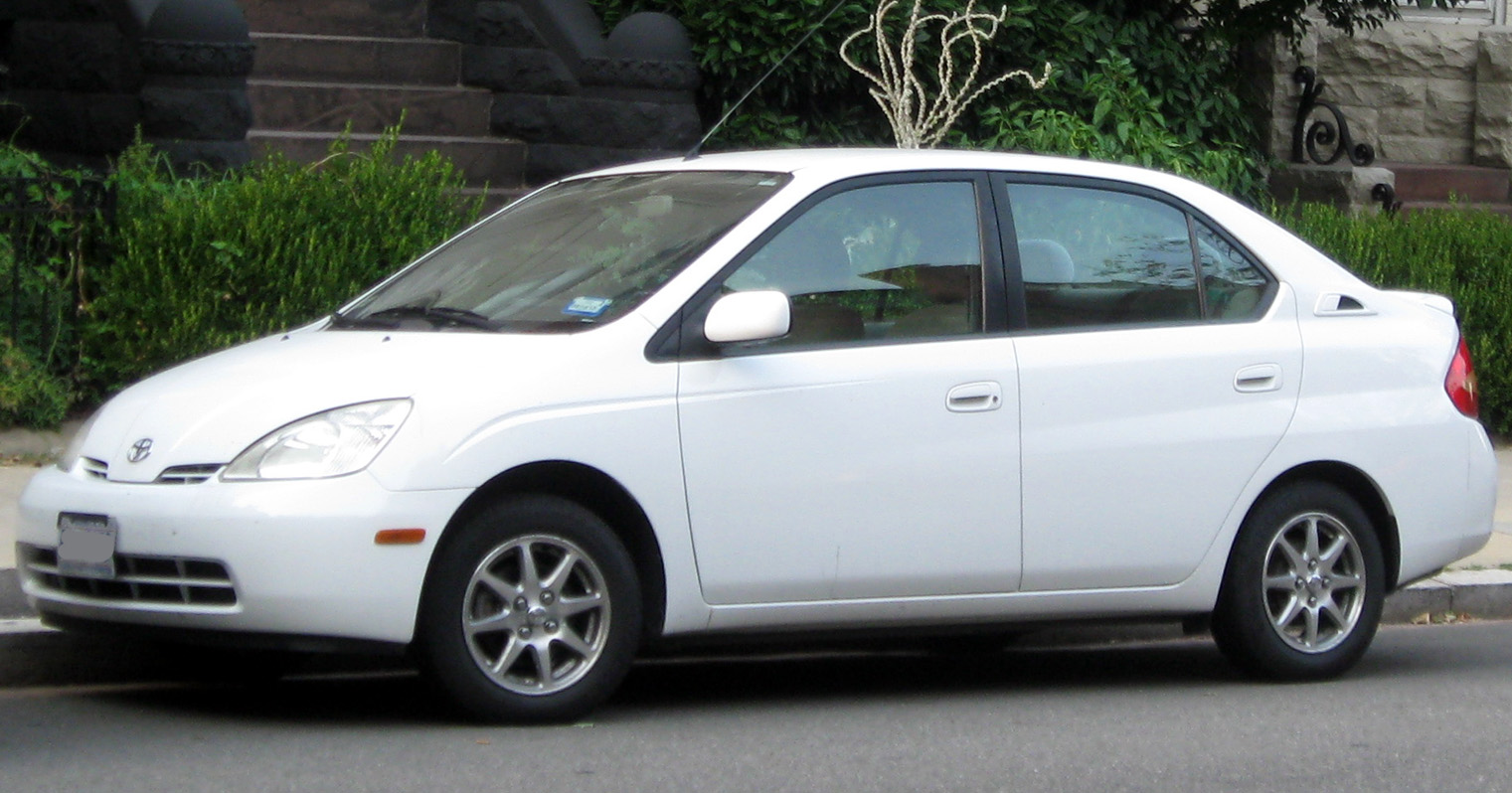
In 1995, Toyota debuted a hybrid concept car at the Tokyo Motor Show, with testing following a year later. The first Prius, model NHW10, came out in 1997. The first generation Prius became the world’s first mass-produced gasoline-electric hybrid car. At its introduction in 1997, it won the Car of the Year Japan Award, and in 1998, it won the Automotive Researchers’ and Journalists’ Conference Car of the Year award. Toyota Prius is a full hybrid electric mid-size hatchback, formerly a compact sedan developed and manufactured by Toyota. The California Air Resources Board and the EPA rate the Prius one of the cleanest vehicles sold in the United States based on smog-forming emissions criteria. When it launched in 1997, Prius was available at all four Toyota Japan dealerships, making it the first mass-produced hybrid vehicle. It was introduced worldwide in 2000. The Prius is currently sold in over 70 countries, with its largest markets in Japan and United States. In 2011, Toyota expanded the Prius model to include the “v” style, which is an extended hatchback wagon, and the “c” style, which is a sub-compact hatchback. The Prius plug-in version hybrid was introduced in 2012. By September 2014, Prius design models reached worldwide sales of almost 5 million cars (almost 70 percent of the 7 million hybrids sold worldwide since 1997).


good one
ReplyDelete