
Since before the rolling of first car's assembly line, Americans have been at the vanguard of Motoring Industry. Americans has made profound effect in the automotive world by introducing automatic transmission, muscle cars, V8 engine, car stereo, electric starter etc,. With their best, American cars are known for luxury, ingenuity, power, glamour and affordability. The recent high performance cars has proved that Americans can go head to head with other cars. From
luxury to ingenuity to speed, these American classics played a significant role
in the evolution of the automotive industry, and each earned their place
in history.
This is the compilation of 10 Classic American Cars that changed the motor industry.
This is the compilation of 10 Classic American Cars that changed the motor industry.
1) Tucker:
Year Launched: 1948
Current Price: $1,567,500
The Tucker 48 (named after its model year) was an advanced automobile conceived by Preston Tucker and briefly produced in Chicago in 1948. Only 51 cars were made before the company folded on March 3, 1949. Tucker took a different track, designing a safety car with innovative features and modern styling. His specifications called for a water-cooled aluminum block flat-6 rear engine,disc brakes, four-wheel independent suspension, fuel injection, the location of all instruments within reach of the steering wheel, seat belts, and a padded dashboard. Some components and features of the car were innovative and ahead of their time. The most recognizable feature of the Tucker '48, a directional third headlight (known as the "Cyclops Eye"), would activate at steering angles of greater than 10 degrees to light the car's path around corners. Because
of their rarity and historical significance, the Tuckers have become
some of the most valuable American cars ever built.
It boasted a fully sealed water-cooling system -- an industry first. Horsepower was 166 and torque a thumping 372 pound-feet from 335 cubic inches, yet the all-alloy powerplant weighed just 320 pounds. The chassis was a sturdy box-section perimeter type with a subframe at each end. Despite its size and 4,200 pounds of heft, the Tucker could manage the 0-60 mph sprint in about 10 seconds. Top speed was at least 120 mph, thanks to the aerodynamic styling with an estimated drag factor of 0.30 -- good even today.

2) CADILLAC:
Launched Year - 1959
Current Price: $148,500
No car evoked the same sense of national identity as much as the 1959 Cadillac. The 1959 Cadillac is remembered for its huge sharp tail fins with dual bullet tail lights, two distinctive rooflines and roof pillar configurations, new jewel-like grille patterns and matching deck lid beauty panels. New mechanical items were a "scientifically engineered" drainage system and new shock absorbers. All Eldorados were characterized by a three-deck, jeweled, rear grille insert, but other trim and equipment features varied. The Seville and Biarritz models had the Eldorado name spelled out behind the front wheel opening and featured broad, full-length body sill highlights that curved over the rear fender profile and back along the upper beltline region.
Engine output was an even 345 hp (257 kW) from the 390 cu in (6.4 L) engine. Standard equipment included power brakes, power steering, automatic transmission, back-up lamps, windshield wipers, two-speed wipers, wheel discs, outside rear view mirror, vanity mirror, oil filter, power windows, six way power seats, heater, fog lamps, remote control deck lid, radio and antenna with rear speaker, power vent windows, air suspension, electric door locks and license frames. The Eldorado Brougham also came with Air conditioning, automatic headlight dimmer, a cruise control standard over the Seville and Biarritz trim lines.

3) Chevrolet Corvette:
Launched Year - 1953
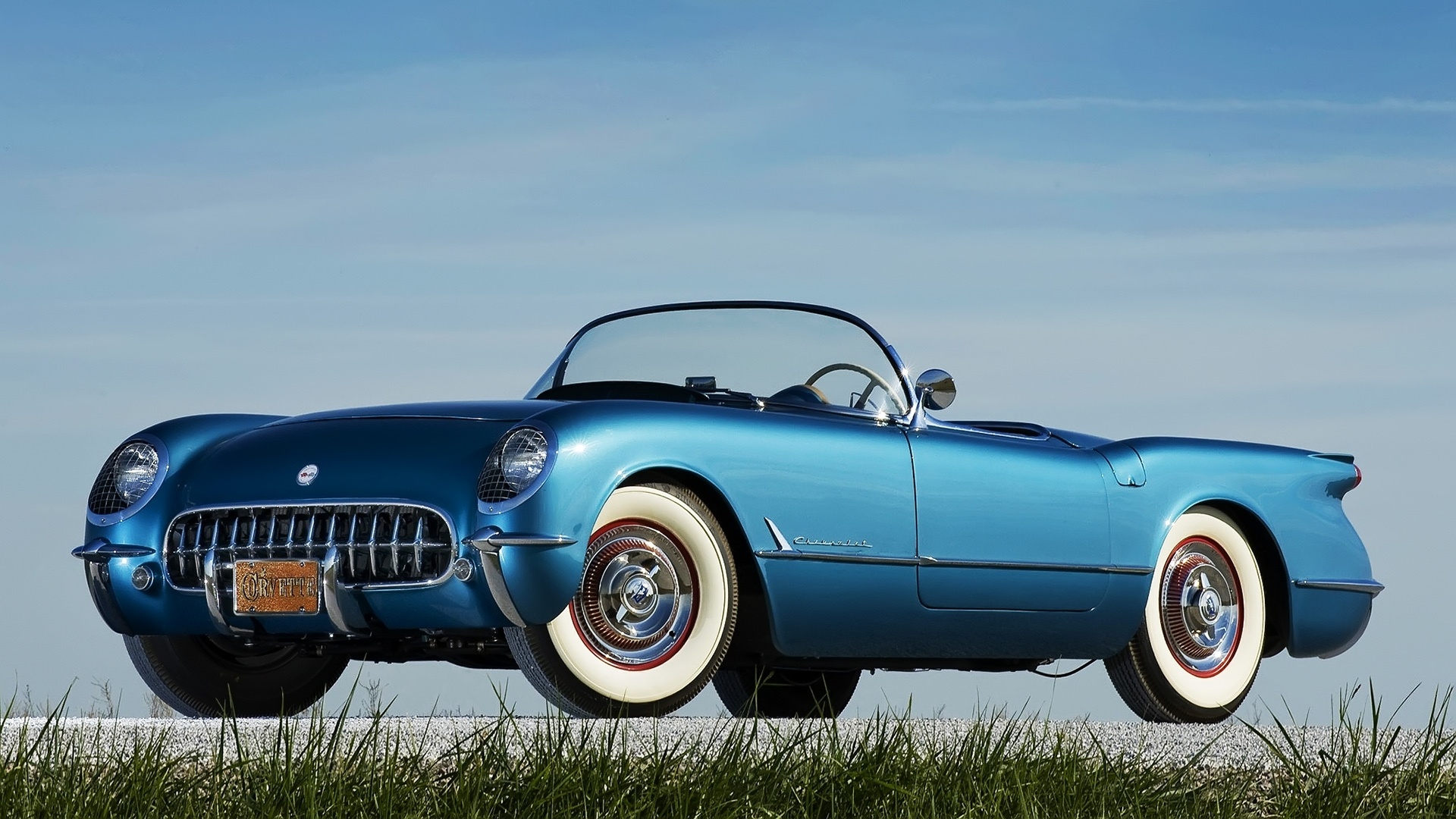
The Chevrolet Corvette, known colloquially as the Vette, is a sports car manufactured by the Chevrolet division of American automotive conglomerate General Motors(GM). The car has been produced through seven generations. The first model, a convertible, was designed by Harley Earl and introduced at the GM Motorama in 1953 as a concept show car. Myron Scott is credited for naming the car after the type of small, maneuverable warship called a corvette. The first production 1953 Corvette rolls off the assembly line in Flint, Michigan. Production is capped at 300 units, all in the now iconic Polo White/Sportsman Red exterior/interior color scheme and powered by the 150-hp, three-carb “Blue Flame” inline-six and a two-speed Power glide transmission. The only options are a heater and an AM radio.
Since then, the
Corvette has become known as “America’s Sports Car,” and amassed one of
the most loyal fan followings of any car in the world. In 2014, a
1967 race-prepped L-88 Stingray Corvette sold for $3.85 million, making it the most expensive
‘Vette of all time.
4) Shelby Cobra:
Launched Year - 1965
Carroll Shelby’s 1962 Cobra represents the pinnacle of the Anglo-American sports car, which combined a classic aluminum roadster body with a tube space frame and lightweight American V-8 engine. Shelby Cobra’s donor chassis came from AC. The AC Ace heretofore had utilized the pre-war BMW 2-liter, 6-cylinder engine, which was going out of production. Understanding that AC needed a replacement motor, Shelby tapped into his Ford connections to user their lightweight 260ci V-8. In the process, Shelby managed to get both sides to agree that the resultant sports car would be manufactured under the Shelby name.
The overall package was dynamite, weighing only 2,100 lbs, with a 260-hp engine mated to a four-speed transmission. Top speed was about 140 mph and 75 were built in 1962 and 1963 before the engine was replaced by Ford’s 271-hp, 289-cid V-8. In race-prepped guise, the engine generated up to 370 hp, and the cars were quite successful on the track. Between 1963 and 1965, 580 Shelby 289 Cobras were sold in the CSX 2000 series. With
flared fenders, massive leg pipes, and a performance-tuned Ford V8, it’s
arguably the quintessential sports car of the 1960s. While it wasn’t a
financial success in its day, the Cobra is fast even by today’s standards, and
collectors are willing to pay a premium for them. This 1967
“Semi-Competition” Cobra was sold by RM Sotheby’s for
$2,117,500 at this year’s Amelia Island auction.

5) Ford Mustang:
Launched Year - 1964
The first-generation Ford Mustang was manufactured by the Ford Motor Company from April 1964 until 1973. The introduction of the Mustang created a new class of automobile known as the pony car. The Mustang’s styling, with its long hood and short deck, proved wildly popular and inspired a host of imitators. This is the car that started America’s love affair with muscle and punch. It was the first of its kind and a wildly popular hit from the start.
The Ford Mustang as the first -- and so far the only -- car to receive the Tiffany Award for Excellence in American Design. They all are powered by the 260 cubic-inch V8 engine and equipped with power steering, back-up lights and an automatic transmission. Other special features include the blue racing stripe and 'Official Pace Car' decals along the sides. Despite a suddenly crowded market, Ford had already sold
1.7 million Mustangs in its first 36 months. Now in its fifth decade, the
Mustang is still at the center of the red-hot American muscle car market.

6) Plymouth Roadrunner Superbird:
Launched Year - 1970
NASCAR rules that required automakers to put on the street facsimiles of the racers they put on the track resulted in some extravagant muscle cars, and none was more outrageous than the 1970 Plymouth Road Runner Superbird. The super speedway "aero wars" were in full flower in 1969 and 1970. Spurred by Ford's wind-cheating Torino Talledega and Mercury's Cyclone Spoiler II, Dodge in 1969 added a wild nose cone and towering rear wing to the Charger 500 body to create the Charger Daytona. The Daytona proved highly effective against its Ford and Mercury rivals in stock-car competition. When Dodge's sister division, Plymouth, clamored for its own winged warrior, it got its wish in the 1970 Road Runner Superbird.
The visceral whack came courtesy of three engine choices: a 440 with a single four-barrel carb and 375 bhp, the "440+6" with triple two-barrel carbs and 390 bhp, or the dual quad 425-bhp 426 Hemi. With its bullet-shaped, bolted-on nose and sky-high wing in back, Superbird is one of the more unusual looking cars ever made. With fewer than 3,000 built, the rare and iconic ‘Bird represents
the peak of muscle car madness. This car sold for $363,000 by RM Sotheby’s in
2013.

7) AMC Eagle:
Launched Year - 1980
The AMC Eagle is a compact-sized four-wheel drive passenger vehicle that was produced by American
Motors Corporation (AMC) from 1979 to 1987. The AMC Eagles were the only four-wheel-drive passenger cars
produced in the U.S. at the time. They
were affordable cars offering a comfortable ride and handling on pavement
together with superior traction in light off road use through AMC's innovative engineering and
packaging. Although the definition is not
precise, the AMC Eagle is today known as the first crossover vehicle.
AMC introduced
the Eagle, a lifted sedan and station wagon with a four-wheel drive system
borrowed from its Jeep brand, creating the world’s first crossover SUV. The
car was a rare bright spot for AMC in the ’80s, selling in respectable
numbers until it was absorbed by Chrysler in 1988. While AMC is long gone, its
engines lived on in Jeep products well into the ’90s, and after years of
semi-obscurity, the Eagle is finally beginning to get its due in the pages of automotive
history. As all-wheel drive crossovers continue to explode in
popularity, they can all trace their roots directly back to this offering from
America’s last major independent automaker.

8) Saleen S7:
Launched Year - 2000
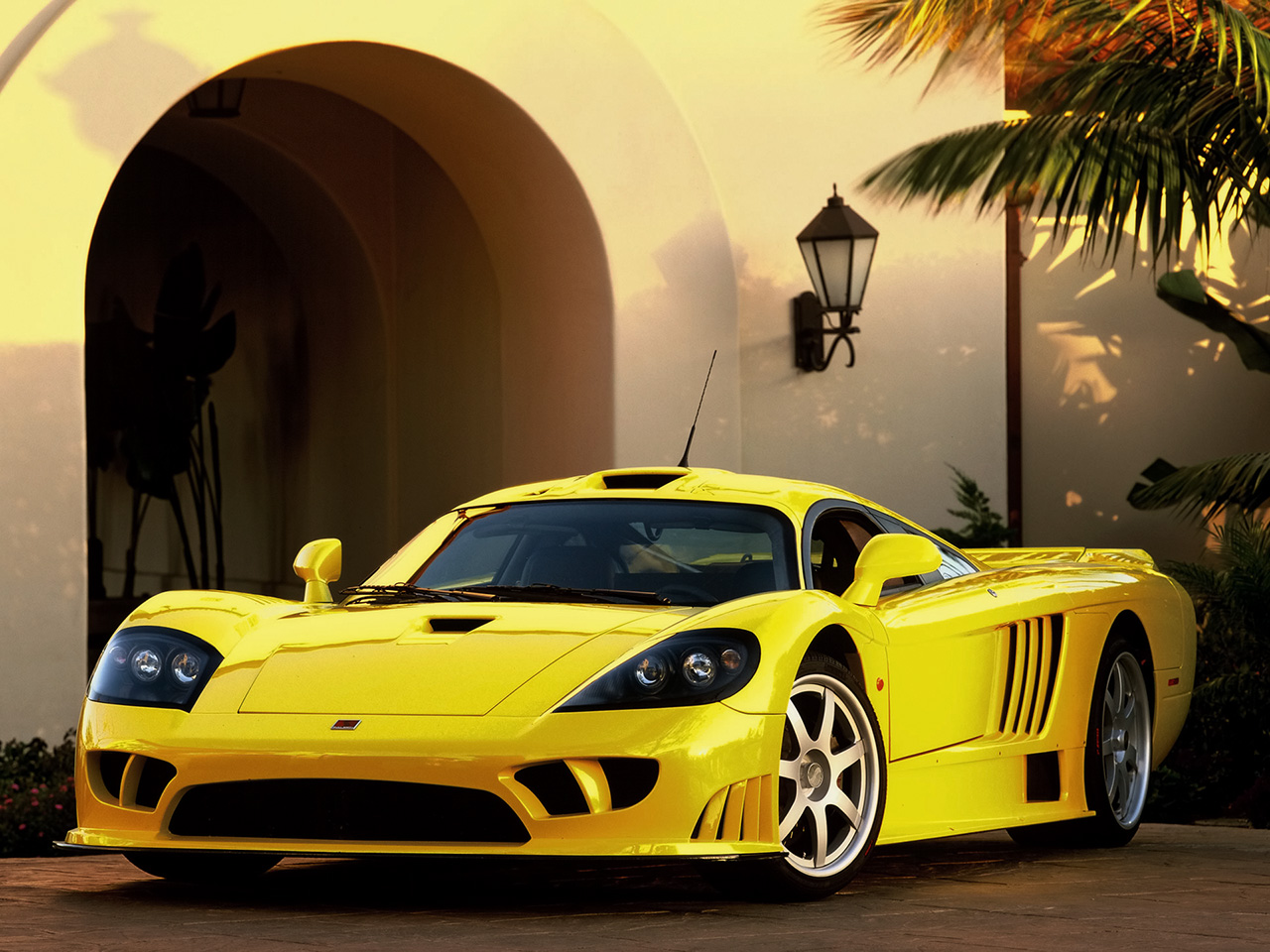
The Saleen
S7 is a limited-production, hand-built,
high-performance American supercar developed jointly by Steve Saleen for the
initial concept and direction, Hidden Creek Industries for resources and
initial funding. With a mid-mounted V8 and stylish carbon fiber
body, the S7 was one of the few supercars produced in America, and Saleen
claimed it was the only car being sold in America with power 500 bhp.
The body of the car, made entirely from carbon fiber, incorporates
the use of scoops, spoilers,
and other aerodynamic features
to create split-channel airflow throughout the car, and at 160 miles per
hour (257 km/h), the car creates its own weight in downforce. The original naturally aspirated version of the S7 can accelerate from
0–60 miles per hour (97 km/h) in an estimated 3.3 seconds, and to
100 miles per hour in an estimated 7.1 seconds. It can complete a standing quarter mile in an
estimated 11.35 seconds, reaching 128 miles per hour (203 km/h). Top speed was an estimated 220 mph. Production ended in 2009, but with a top speed of 248 miles per hour, the
S7 is still one of the first American super cars that could to stand up to
Europe’s best.
9) Ford GT:
Launched Year - 2005
The Ford GT is an American
mid-engine two-seater sports car. Ford Motor Company produced the
Ford GT for the 2005 to 2006 model years. The designers drew inspiration from
Ford's GT40 racing cars of the 1960s.
The Ford GT features many new and unique
technologies, including superplastic-formed frame, aluminum body panels,
roll-bonded floor panels, a friction stir welded center tunnel, a
"ship-in-a-bottle" gas tank, a capless fuel filler system, one-piece
door panels, and an aluminum engine cover with a one-piece carbon
fiber inner panel. Brakes
are four-piston aluminum Brembo calipers with cross-drilled and
vented rotors at all four corners. When the rear canopy is opened, the rear
suspension components and engine are visible. The mid-mounted
5.4 L Modular V8 engine is all-aluminum with a
Lysholm twin screw-type supercharger. It features a forged rotating
assembly housed in an aluminum block designed specifically for the GT program.
A dry sump oiling system is employed, allowing the engine to sit low in the
car's frame. Power output is 550 hp (410 kW; 558 PS) at 6500
rpm and generates 500 lb·ft (678 N·m) of torque at 3750
rpm. A Ricardo six-speed manual transmission is fitted featuring
a helical limited-slip differential. Even though the GT was a high
profile halo car for Ford, production ended after only 4,038 of the
mid-engined supercars were built. An all-new GT was unveiled at
2015’s Detroit Auto Show, and Ford plans to enter the car in the 2016
endurance race at Le Mans – exactly 50 years after the GT40’s historic 1-2-3
finish.

10) Hennessey Venom GT:
Launched Year - 2012
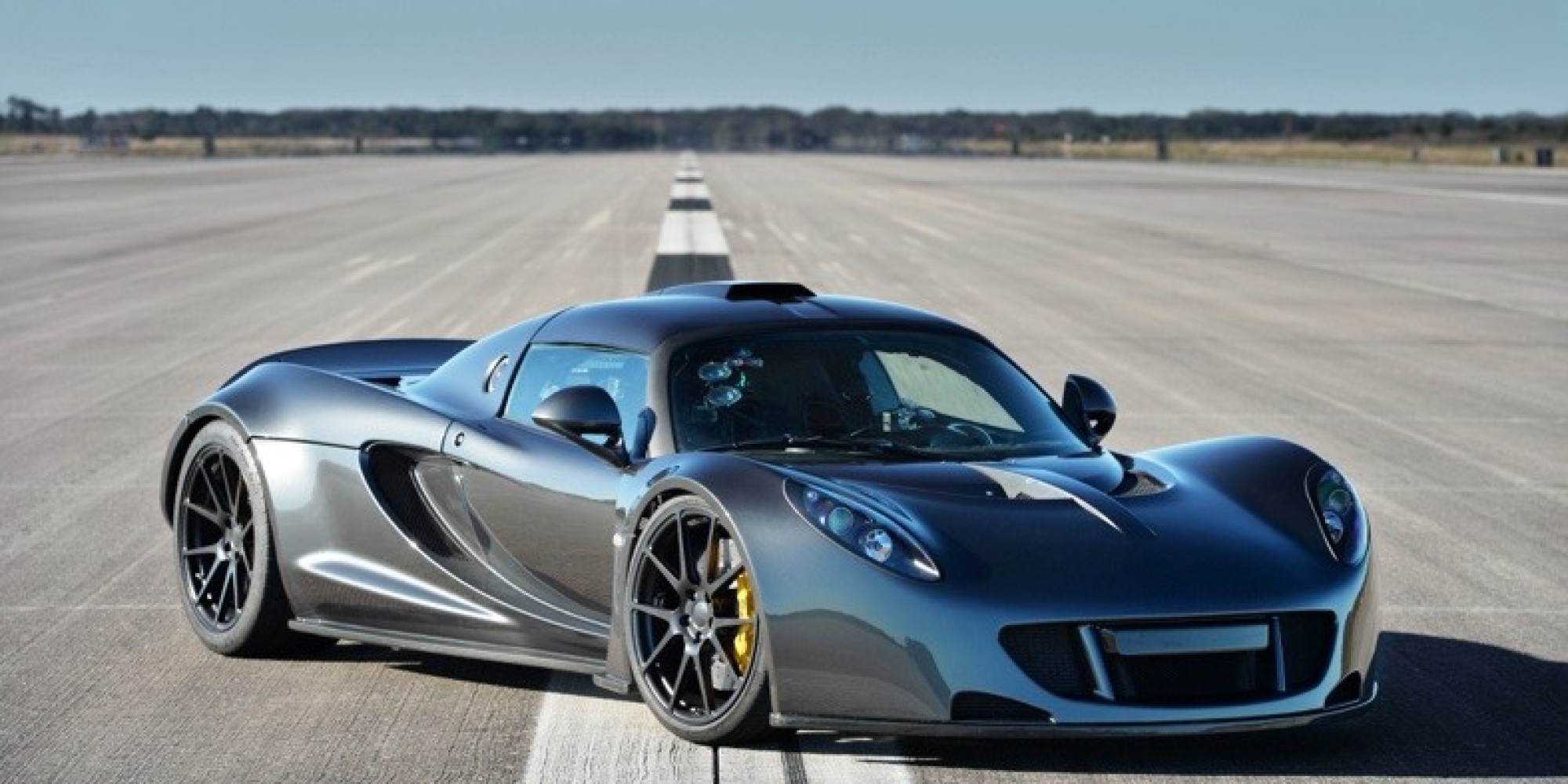
The Hennessey Venom GT is a supercar based on the Lotus Exige manufactured by Texas-based Hennessey Performance Engineering and assembled in England.
On January 21, 2013, the Venom GT set a Guinness World Record for the fastest production car from 0–300 kilometres per hour (0–186 mph) with an average acceleration time of 13.63 seconds. In addition, the car set an unofficial record for 0–200 mph (0–322 km/h) acceleration at 14.51 seconds, beating the Koenigsegg Agera R's time of 17.68 seconds, making it the unofficial fastest accelerating production car in the world.
On April 3, 2013, the Hennessy Venom GT crested 265.7 mph (427.6 km/h) over the course of 2 miles (3.2 km) during testing at United States Naval Air Station Lemoore in Lemoore, California. Hennessey used two VBOX 3i data logging systems to document the run and had VBOX officials on hand to certify the numbers.
On February 14, 2014, on the Kennedy Space Center’s 3.22-mile (5.18 km) shuttle landing strip in Florida, the Hennessey team recorded a top speed of 270.49 mph (435.31 km/h) with Director of Miller Motorsport Park, Brian Smith, driving. As the run was in a single direction, and only 16 cars have been sold to date (to qualify Hennessey must build 30), it does not qualify as the world's fastest production car in the Guinness Book of Records.
The Venom GT is powered by twin turbocharged 427 cu in (7.0 L) V8 GM LSX engine with an iron block and aluminum heads featuring twin precision ball bearing turbochargers. The engine produces 1,244 bhp (928 kW; 1,261 PS) of power at 6,600 rpm and 1,155 lb·ft (1,566 N·m) of torque at 4,400 rpm. Engine power output is adjustable by three settings: 800 bhp (597 kW; 811 PS), 1,000 bhp (746 kW; 1,014 PS) and 1,200 bhp (895 kW; 1,217 PS). The engine revs to 7,200 rpm.
The mid-engine V8 is mated to the rear wheels with a Ricardo 6-speed manual transmission. Hennessey claims that the car can achieve a top speed of 278 miles per hour (447 km/h), although this has never been tested.
While the Veyron was limited to 450 cars, Hennessey plans to produce
only 10 of the $1million cars a year, making the Venom GT one of the
rarest hypercars in the world.


0 comments:
Post a Comment